The Four Noble Truths
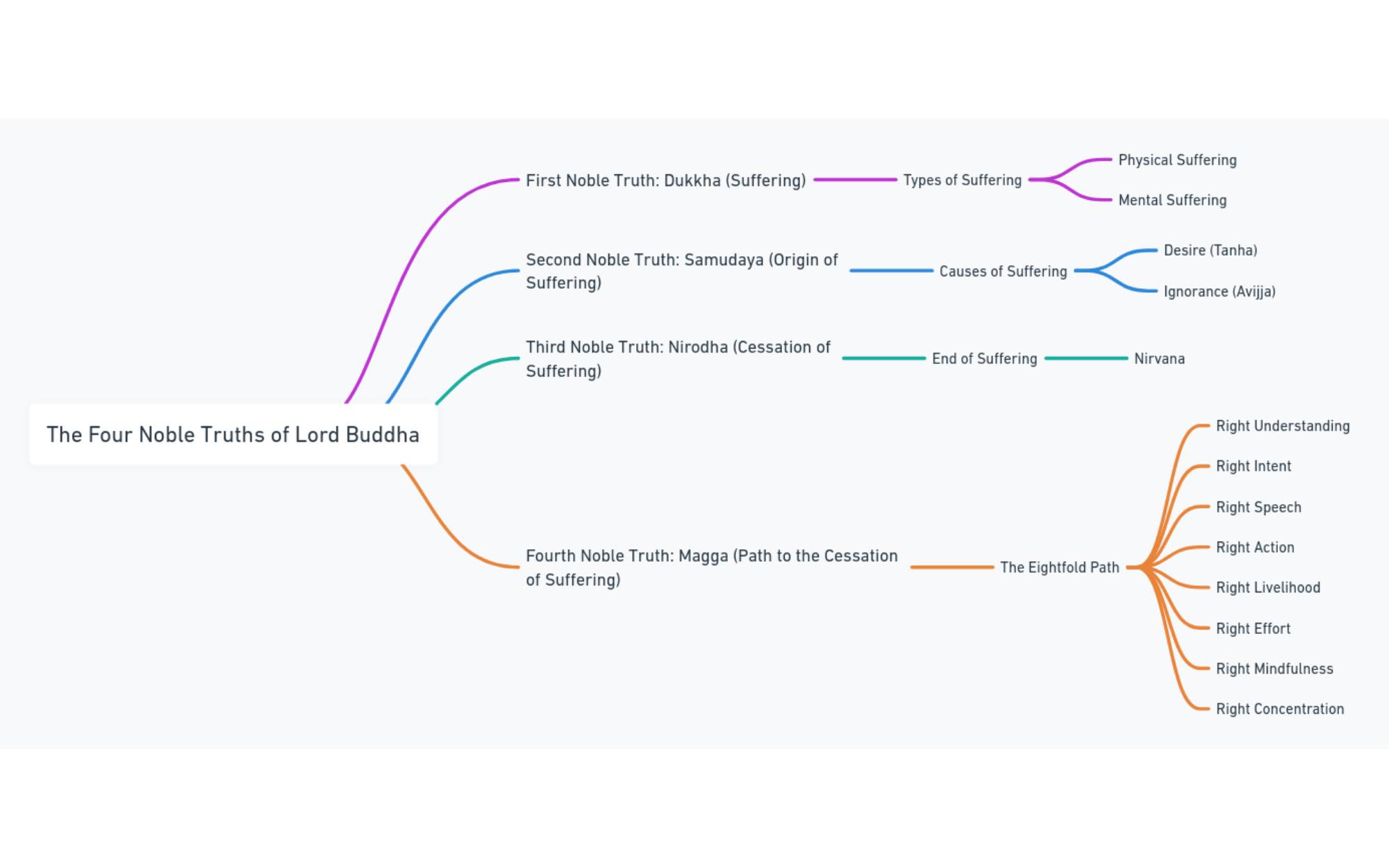
The Four Noble Truths form the foundation of Buddhist teaching and encapsulate the essence of the Buddha’s enlightenment experience. These truths offer a comprehensive framework for understanding human suffering and the path to its cessation.
1. The First Noble Truth: Dukkha (The Truth of Suffering)
Definition of Dukkha
- Dukkha is commonly translated as "suffering," but it also encompasses concepts like imperfection, impermanence, and unsatisfactoriness.
Aspects of Suffering
- Physical Suffering: Pain, illness, aging, and death.
- Emotional Suffering: Grief, disappointment, frustration, and dissatisfaction.
- Existential Suffering: The inherent dissatisfaction in life due to its transient nature.
Examples in Life
- Everyday experiences like loss, unfulfilled desires, and the inevitable changes that life brings.
2. The Second Noble Truth: Samudaya (The Truth of the Origin of Suffering)
Causes of Suffering
- Tanha (Craving): Desires for sensory pleasures, existence, and non-existence.
- Attachment: Clinging to people, objects, and ideas.
- Ignorance: Misunderstanding the nature of reality and the self.
Types of Craving
- Kama-tanha: Craving for sensual pleasures.
- Bhava-tanha: Craving for existence or becoming.
- Vibhava-tanha: Craving for non-existence or self-annihilation.
3. The Third Noble Truth: Nirodha (The Truth of the Cessation of Suffering)
End of Suffering
- Suffering can be overcome by eliminating craving and attachment.
- Achieving Nirodha means realizing Nirvana, the ultimate state of liberation and freedom from the cycle of rebirth (samsara).
Nature of Nirvana
- Nirvana is described as the extinguishing of the fires of greed, hatred, and delusion.
- It is a state of peace, profound wisdom, and unconditioned happiness.
4. The Fourth Noble Truth: Magga (The Truth of the Path to the Cessation of Suffering)
- The Noble Eightfold Path
Wisdom (Panna)
- Right Understanding (Samma Ditthi): Understanding the Four Noble Truths.
- Right Intention (Samma Sankappa): Commitment to ethical and mental self-improvement.
Ethical Conduct (Sila)
- Right Speech (Samma Vaca): Speaking truthfully and harmoniously.
- Right Action (Samma Kammanta): Acting in ways that do not harm others.
- Right Livelihood (Samma Ajiva): Earning a living in a way that is ethical and harmless.
Mental Discipline (Samadhi)
- Right Effort (Samma Vayama): Cultivating positive states of mind.
- Right Mindfulness (Samma Sati): Developing awareness of the body, feelings, mind, and phenomena.
- Right Concentration (Samma Samadhi): Practicing meditation to achieve mental focus and tranquility.
Conclusion
The Four Noble Truths offer a profound insight into the nature of human existence and provide a practical path for overcoming suffering. By understanding and practicing these truths, one can achieve a state of lasting peace and enlightenment.